

Is Every Negative Thought from the Devil? How to Discern Lies with God's Word
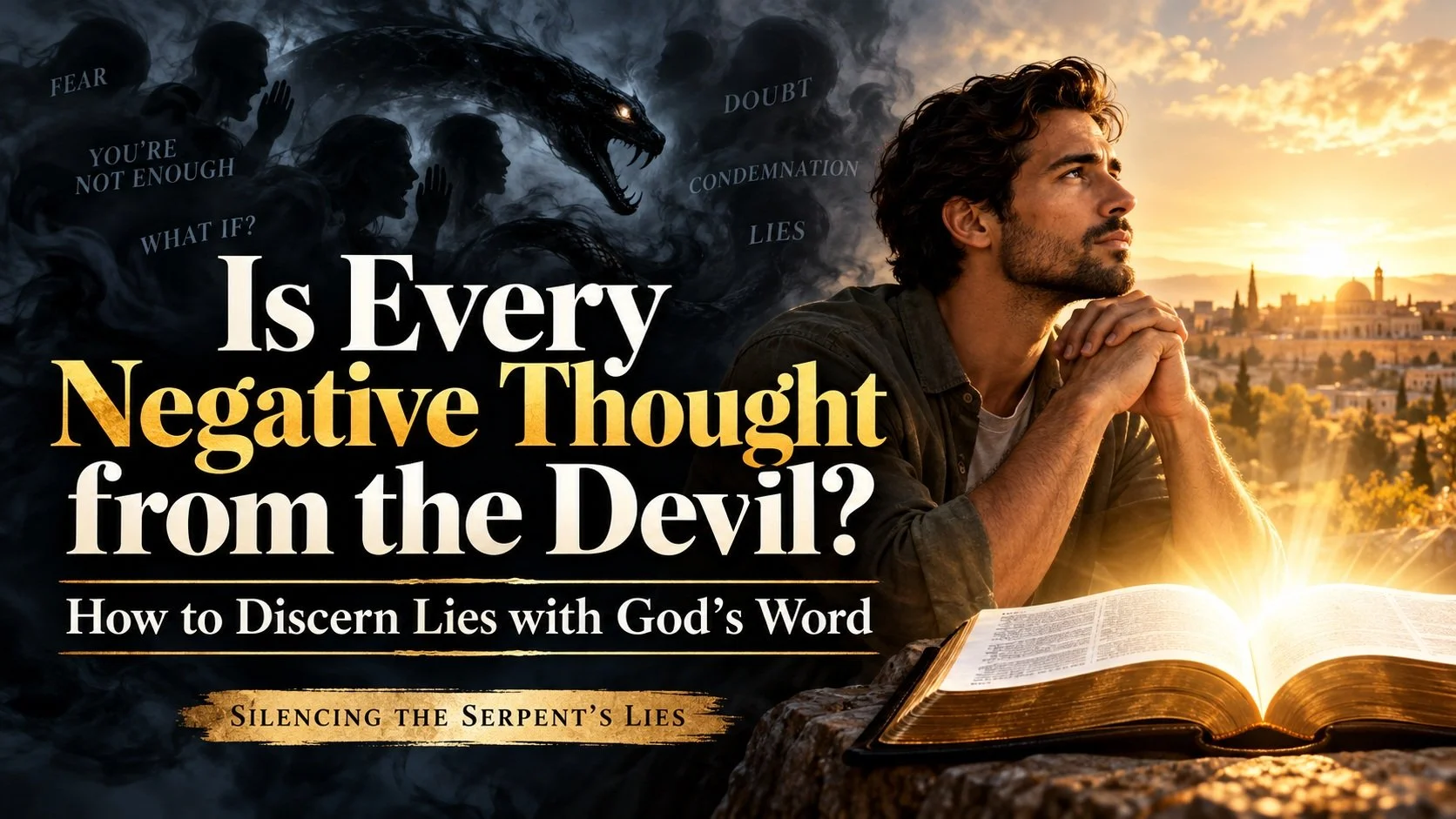
Silencing the Serpent's Lies Series | By Milton Goh
Have you ever had a disturbing thought suddenly enter your mind and wondered:
“Was that the devil speaking to me?”
Perhaps you were enjoying a peaceful day when an unsettling thought appeared:
“Something terrible is going to happen.”
“God isn't going to help you this time.”
“You will never overcome this problem.”
“Your future is going to be miserable.”
And suddenly, you found yourself wondering whether you were experiencing spiritual warfare.
Christians know that Satan is a deceiver. Scripture warns us about his schemes, temptations, and accusations.
But does that mean every negative or unwanted thought comes directly from the devil?
No. The Bible teaches that Satan can deceive and tempt people, but it does not teach that every negative thought is a demonic attack.
Our thoughts can also be influenced by our own desires, memories, habits, fears, emotional struggles, and the messages we receive from the world around us.
Here is the important truth I want you to understand today:
You do not have to identify the hidden source of every thought before you can respond to it with God's Word.
Instead of becoming preoccupied with determining whether every troubling thought came from Satan, you can learn to recognize what contradicts Scripture and return your attention to Jesus Christ.
That is one of the most practical ways to silence the serpent's lies.
Spiritual Warfare Is Real, but Not Everything Is a Spiritual Attack
The apostle Paul wrote:
“For our wrestling is not against flesh and blood, but against the principalities, against the powers, against the world's rulers of the darkness of this age, and against the spiritual forces of wickedness in the heavenly places.”
— Ephesians 6:12 (WEB)
The Bible clearly acknowledges spiritual opposition.
Satan is real. Demonic deception is real. Christians are instructed to resist the devil, stand firm in faith, and put on the whole armor of God.
However, acknowledging spiritual warfare does not mean we should interpret every inconvenience, troubling emotion, or unwanted thought as evidence of direct demonic activity.
Imagine someone waking up after a restless night, feeling exhausted and unusually anxious.
Thoughts begin racing through that person's mind.
“What if something goes wrong today?”
“What if I fail?”
“What if I can't handle everything?”
Those thoughts may be connected to fatigue, anxiety, an unresolved problem, or several factors working together.
We should not immediately announce that a demon is attacking the person.
Likewise, we should not dismiss the spiritual dimension of life as though Satan never attempts to exploit fear and deception.
Biblical discernment helps us avoid both extremes.
We acknowledge the reality of spiritual warfare while remaining grounded in Scripture, wisdom, and the finished work of Jesus.
The Serpent's Strategy: Making a Lie Seem Believable
Consider how Satan tempted Eve in the Garden of Eden.
He did not begin by openly announcing that he wanted humanity to rebel against God.
Instead, he questioned what God had said.
“Has God really said...?”
— Genesis 3:1 (WEB)
The serpent's approach was subtle.
He introduced doubt, distorted God's command, and portrayed God as someone who was withholding something desirable from humanity.
The deception worked by persuading Eve to interpret God's goodness through the serpent's misleading words.
This is an important lesson for us.
A deceptive thought becomes dangerous not simply because it enters our awareness, but because we may begin treating it as trustworthy.
For example, consider this thought:
“God has forgotten about me because my prayer hasn't been answered.”
Notice how the thought moves from a real circumstance to an unsupported conclusion.
The circumstance may be true: you have prayed, and the answer has not yet manifested.
But does that prove that God has forgotten you?
Absolutely not.
The Bible reveals a God who is faithful, compassionate, and attentive to His children.
We must not allow a difficult circumstance to redefine God's character.
The serpent wants the circumstances you can see to become more convincing than the truth God has spoken.
Faith brings us back to God's Word.
What Does It Mean to Take Every Thought Captive?
One of the most frequently quoted passages about spiritual warfare is 2 Corinthians 10:3–5.
Paul speaks about spiritual weapons that are mighty before God for overthrowing strongholds, arguments, and proud claims that oppose the knowledge of God.
He concludes by describing the act of:
“bringing every thought into captivity to the obedience of Christ”
— 2 Corinthians 10:5 (WEB)
In context, Paul is confronting arguments and claims that resist the truth of Christ.
This is not an instruction to become frightened of every passing thought or to spend your entire day examining the possible involvement of demons.
Rather, it teaches us the importance of bringing what we believe into submission to the truth of Jesus Christ.
Suppose you begin believing:
“God will only accept me when I become a better Christian.”
That belief contradicts the Gospel of grace.
Romans 5:17 describes righteousness as a gift received through Jesus Christ.
God does not justify us because we have finally achieved perfect behavior.
We are justified through faith in Jesus.
So when a thought tells you that God's acceptance depends on your performance, you can challenge that thought with Scripture.
You are not required to keep entertaining a conclusion that contradicts what Christ has accomplished.
This is what renewing your mind with God's Word looks like in everyday life.
Three Questions to Ask When a Troubling Thought Appears
Instead of asking only, “Did Satan put this thought in my mind?” consider three better questions.
1. Does this thought agree with Scripture?
God's Word is the foundation of Christian discernment.
The Holy Spirit will not lead believers into something that contradicts the truth He has revealed in Scripture.
For example, if a thought tells you:
“God has abandoned you.”
Compare that claim with Hebrews 13:5, where God promises not to forsake His people.
If a thought says:
“Your sins are too great for Jesus to forgive.”
Remember the sufficiency of Christ's sacrifice and the assurance of Romans 8:1.
If a thought says:
“You must compromise God's ways to become successful.”
Remember how Jesus resisted the devil's offer of worldly authority in Luke 4.
A thought may feel powerful, urgent, or convincing.
That does not make it true.
The truthfulness of a thought is not determined by how strongly you feel it.
2. Does this thought reflect the character of Jesus?
Jesus reveals the Father to us.
He is full of grace and truth.
His compassion toward sinners never meant that sin was harmless, but His purpose was to save and restore rather than to deceive and destroy.
Consider the difference between these two responses to failure.
One says:
“What you did was wrong. Bring it before God, receive His mercy, and take the necessary steps to make things right.”
The other says:
“You made a mistake. God must be finished with you. You should give up.”
The first response agrees with the Gospel's invitation to repentance, mercy, and restoration.
The second moves toward despair and hopelessness.
Remember, dear child of God, Jesus is not waiting eagerly for an opportunity to reject you.
He gave Himself for you.
When you are struggling, your Savior invites you to draw near to the throne of grace.
3. What happens when I keep believing this thought?
Wrong beliefs can shape our emotions, decisions, relationships, and habits.
A person who believes that God is continually angry with them may begin avoiding prayer.
Someone who believes that failure is inevitable may stop attempting anything worthwhile.
A Christian who believes that every problem is caused by demons may become increasingly fearful and distracted from the simple truths of Scripture.
This does not mean every uncomfortable thought is false.
Sometimes the truth confronts us, corrects us, and challenges us to change.
The important question is whether the thought agrees with God's revealed truth and leads us toward a faithful response.
Does it encourage honesty, repentance, faith, wisdom, love, and obedience?
Or does it invite deception, hopelessness, destructive choices, and distrust of God?
Use Scripture to discern the difference.
The Shield of Faith Helps You Resist the Enemy's Fiery Darts
Paul describes a wonderful piece of God's armor:
“above all, taking up the shield of faith, with which you will be able to quench all the fiery darts of the evil one.”
— Ephesians 6:16 (WEB)
Imagine a soldier holding up a shield as fiery arrows fly toward him.
The soldier does not have to examine every arrow to determine where it was manufactured.
His immediate responsibility is to use the protection provided to him.
Likewise, when fearful or deceptive thoughts arise, your confidence rests in the faithful God whose promises you believe.
Consider some examples.
The lie: “God has abandoned me.”
The truth: Jesus remains faithful to His people. My difficult circumstances do not prove that He has left me. (Hebrews 13:5)
The lie: “My past mistakes have ruined every possibility of a good future.”
The truth: In Christ there is forgiveness, restoration, and the possibility of walking forward in wisdom. My past does not have to define my identity. (2 Corinthians 5:17)
The lie: “I am too weak to resist temptation.”
The truth: God is faithful. He provides grace and a way to endure temptation, and His Spirit enables me to walk in obedience. (1 Corinthians 10:13; Galatians 5:16)
The lie: “Because I feel afraid, I must have failed in faith.”
The truth: Faith is not measured by the complete absence of fear. I can bring my weakness honestly to Jesus and trust Him for help. (Mark 9:24; Hebrews 4:16)
These truths do not depend on your emotions becoming peaceful instantly.
They remain true even while your feelings are catching up with what God's Word says.
You Don't Need to Fight Every Thought by Shouting at It
Some Christians become anxious because they think every unwanted thought must be confronted through an elaborate spiritual battle.
They may feel that unless they speak forcefully enough, repeat a particular declaration enough times, or identify the responsible demon, the thought will gain power over them.
But look at how Jesus resisted the devil in the wilderness.
He responded with Scripture.
He understood the Father's Word and refused to depart from it.
The devil even quoted Scripture to tempt Jesus into acting presumptuously, but Jesus recognized the misuse of God's Word and answered from its proper meaning.
The authority was not in the loudness of Jesus' response.
He was standing faithfully upon the Father's truth.
In the same way, you can speak Scripture aloud when it helps you focus on God's promises.
But the words are not a magical formula.
Your victory does not depend on performing a spiritual technique perfectly. It depends on the Savior who has already triumphed.
Sometimes resisting a lie means confidently confessing God's Word.
Sometimes it means refusing to entertain a temptation.
Sometimes it means praying with another believer.
And sometimes the wisest response is to stop rehearsing the troubling thought, rest, and return to what God has already made clear.
When Thoughts Keep Returning, Don't Assume You Have Failed Spiritually
This is especially important for believers who struggle with repeated unwanted thoughts.
You may reject a frightening thought one moment and find it returning later.
That does not automatically mean you have weak faith.
It does not prove that a demon is controlling your mind.
Nor does the mere appearance of an unwanted thought mean you have agreed with it or committed a sin.
Our minds can produce distressing or intrusive thoughts for many reasons.
Some Christians become trapped in a cycle of examining every thought, trying to determine its origin, and then feeling guilty because it appeared again.
That cycle can become exhausting.
You do not have to turn every mental event into a spiritual emergency.
Bring your concerns to the Lord. Continue receiving His Word. Seek encouragement from mature believers.
If thoughts are persistent, intrusive, or seriously affecting your daily life, it is also wise to seek support from a qualified mental health professional.
Prayer and appropriate professional care are not enemies.
God can work through Scripture, wise counsel, loving community, and practical help.
The goal is not to become more afraid of your thoughts.
It is to become more established in Christ.
The Most Important Truth in Spiritual Warfare: Jesus Has Already Won
There is something I want you to remember whenever you study spiritual warfare.
Satan is not equal to God.
He is a created being.
Jesus Christ is the eternal Son of God who became flesh, died for our sins, rose from the dead, and now reigns in glory.
Colossians 2:13–15 reveals that God forgave our trespasses, canceled the debt that stood against us, and triumphed over the spiritual rulers and authorities through Christ.
The enemy can still tempt, deceive, and accuse.
But he cannot overturn what God has accomplished through Jesus.
Colossians 1:13–14 declares that believers have been delivered from the authority of darkness and brought into the kingdom of God's beloved Son.
You belong to Jesus.
You do not need to live in terror of unseen powers.
You do not need to decode every frightening thought.
You do not need to become an expert in demonic activity before you can enjoy fellowship with your heavenly Father.
Your greatest advantage in spiritual warfare is not knowing more about the enemy.
It is knowing Jesus more deeply.
Five Simple Ways to Respond When Negative Thoughts Trouble You
The next time a troubling thought appears, try these practical responses.
Pause before agreeing with the thought. A thought entering your mind does not make its message true.
Compare the thought with Scripture. Ask what God has actually revealed rather than what fear is suggesting.
Remember your identity in Christ. You are not defined by every emotion, temptation, or unwanted thought that you experience.
Take the next wise step. This may involve prayer, rest, leaving a tempting situation, speaking to someone trustworthy, or making a needed change.
Return your attention to Jesus. Let His finished work, His love, and His promises become more important to you than the frightening possibility your mind is presenting.
You may not feel different immediately.
But your feelings are not the final authority over your life.
God's Word is truth.
Keep receiving it, meditating on it, and allowing the Holy Spirit to renew your understanding.
Silence the Serpent by Becoming Established in Truth
The serpent has been challenging God's Word since the beginning.
His question was:
“Has God really said...?”
And that question still captures the nature of so much spiritual deception.
Has God really forgiven you?
Has God really accepted you?
Has God really promised to remain with you?
Has Jesus really defeated the enemy?
Dear child of God, the answer is found in Scripture.
You do not have to approach life suspicious of every thought, frightened of every difficulty, or constantly looking for Satan behind ordinary human struggles.
Instead, keep looking to Jesus.
As you grow in your understanding of God's Word, you become better equipped to recognize what contradicts His truth.
You can resist temptation without fear.
You can respond to accusation without despair.
You can face uncertainty without concluding that God has abandoned you.
And you can stand firmly in the victory Jesus has already secured.
The serpent may continue speaking lies, but you do not have to keep believing them.
Want to Grow Stronger in Spiritual Warfare? Read Silencing the Serpent
Recognizing deceptive thoughts is just one part of learning to stand victorious in Christ.
In my book, Silencing the Serpent: How to Overcome the Enemy's Lies and Stand Victorious in the Truth of God's Word, I take you deeper into what Scripture teaches about spiritual warfare.
The book explores how Christians can recognize deception, resist temptation, overcome spiritual strongholds, understand their righteousness in Christ, use the armor of God, pray confidently, and walk by the Holy Spirit.
Rather than encouraging fear of Satan, my desire is to help you become more confident in Jesus and His finished work.
If you have been searching for a Scripture-centered Christian book about overcoming the enemy's lies, renewing your mind, resisting the devil, and standing firm in faith, I wrote this book for you.
Discover Silencing the Serpent by Milton Goh — available as a digital eBook on my website.
The physical paperback edition is also available through Amazon.
You can also read the previous article in this series: How to Silence the Serpent's Lie When You Feel Like You're Not Good Enough.
Truth silences the voice of the enemy.
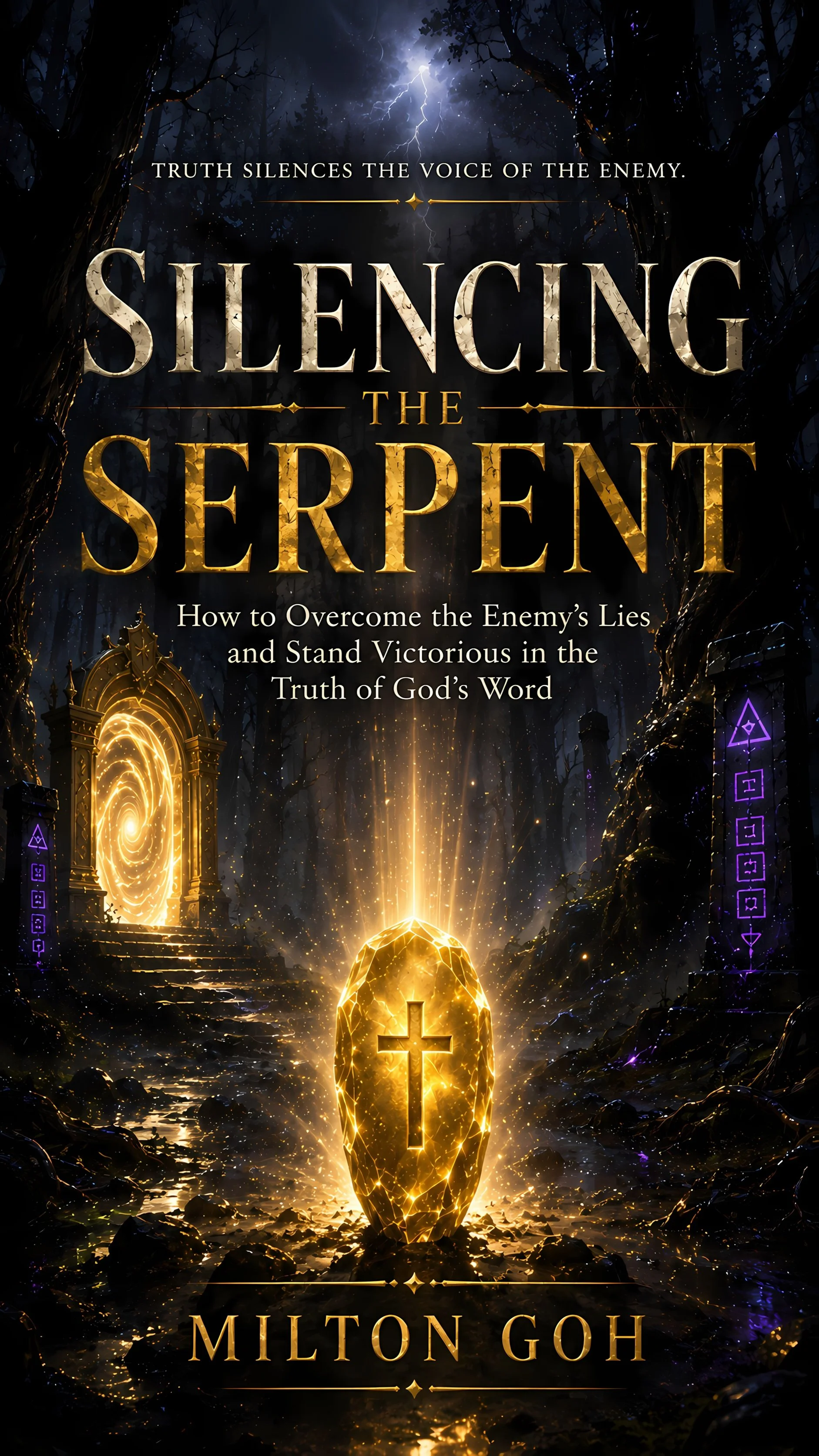
This is a digital downloadable eBook.
It is a revised definitive edition that was previously published as Silencing the Serpent by Milton Goh.
If you would like to purchase the physical paperback version of this book, you can order it on Amazon.
What if the enemy’s most dangerous lie is the one you have already accepted as truth?
Satan does not always attack with something obviously evil. Sometimes deception sounds reasonable. Fear feels justified. Condemnation feels deserved. A wrong belief can remain hidden for years—quietly shaping the way you see God, yourself, and your future.
But lies lose their power when truth enters.
Silencing the Serpent is a Scripture-centered guide to spiritual warfare that will help you recognize the enemy’s deceptions without becoming fascinated with darkness or afraid of spiritual opposition.
In this definitive revised edition, Milton Goh takes you through God’s Word to show you how to stand firmly in what Jesus Christ has already accomplished through His finished work.
Discover how to:
Recognize temptation, accusation, deception, and spiritual strongholds
Renew your mind with biblical truth and reject condemning lies
Stand securely in your righteousness and identity in Christ
Resist the devil from a position of faith rather than fear
Pray confidently for healing, provision, protection, and deliverance
Understand the biblical place of angels, fasting, spiritual gifts, and prayer in the Spirit
Use the armor of God as part of a Christ-centered life of truth, faith, hope, and prayer
Walk by the Holy Spirit and resist bitterness, temptation, fear, and condemnation
Spiritual warfare is not about obsessing over demons, discovering secret spiritual formulas, or becoming impressed with the power of darkness.
Jesus is the center of the Christian life.
He has redeemed you. God has justified you. The Holy Spirit dwells in you. And the truth of God’s Word gives you firm ground on which to stand.
This is not a book about becoming fascinated with darkness. It is about becoming established in the truth.
Learn to recognize the lie, answer it with truth, resist the serpent, and keep your eyes fixed on Jesus.
Customer Reviews for the first edition of “Silencing the Serpent”:
"Thank you brother Milton for this amazing book. It has been much needed in my current season when I'm going through so much demonic attack through people supposedly close to me. God has used the Word to remind me that He is with me ALL the way and that I should have NO fear. No weapon formed against me can prosper and every tongue raised against me in judgement I have the power to condemn with ALL the weapons of warfare given to us by God. I'm blessed and grateful to God for using you to assure me of His Mighty Presence--that He will never leave me nor forsake me. Hallelujah & Amen!" - Shally Joseph from India
"Milton Goh, I downloaded your book and it was God's appointed time for my breakthrough. He destroyed a stronghold in my life that was rooted on a lie. A light just went on in an instant and the Lord uprooted a wrong belief. I struggled now for years with a relationship and I believed a lie that a sin I committed in the past was unforgivable, and I judged the other person for the same sin. It was unconscious and I didn't know that I was bound by this lie. When I read a chapter in this book, about strongholds in the mind, the Holy Spirit revealed it to me in a flash and it was as if the walls of Jericho were tumbling down! Thanks for this book--it is from the Lord!" - Antoinette Hurter Keyser from South Africa
"A short testimony to share after reading the chapter about girding up our loins with the TRUTH. After reading it, I met some of my colleagues and the first thing they told me was, "You are fat, you put on weight," not even "Hi, hello, how are you..." At first, I was sad over the remarks. But almost immediately, I was reminded of truth of God's Word which says that "I am highly favored, beloved of Jesus, and Jesus sees me as fit and healthy. I am not defined by what others say, but by what Jesus says!" After that, I carried on with work and went for my run and managed to complete close to 5km. Something which I have never done before. All praise and glory to Jesus. Thank you, brother Milton for your teaching on the armor of God shared in this book! - Alwin Seeni from Singapore
"Thank you brother Milton. Your insights are a blessing. God bless you with many more beautiful revelations." - Shirley Thomas from India
“Anointed book. I am fully blessed by this book. My heart has has been filled with peace and joy since I read it. Wrong beliefs and strongholds are loosing their hold on me.” - Loise from the USA
“Full of useful tips. Another great book by Milton Goh well worth buying and sandcastles don't last forever is another fantastic read.” - Tamz from the UK
Frequently Asked Questions About Negative Thoughts and Spiritual Warfare
Does every negative thought come from Satan?
No. While Scripture teaches that Satan deceives and tempts people, negative thoughts can also arise from ordinary human experiences, emotions, memories, habits, personal desires, and stress. Christians should evaluate what a thought claims against God's Word rather than automatically attributing it to demonic activity.
How can I know whether a thought is from God or the enemy?
Examine whether the thought agrees with Scripture, reflects the character of Jesus, and leads toward truth, love, repentance, wisdom, and obedience. Spiritual impressions should be tested rather than accepted merely because they feel powerful. Seek wise counsel when necessary.
What does taking every thought captive mean in the Bible?
In 2 Corinthians 10:3–5, Paul describes confronting arguments and claims that oppose the knowledge of God. For believers, this supports the practice of rejecting beliefs that contradict Scripture and bringing our thinking into agreement with the truth of Christ. It does not require obsessively monitoring every passing thought.
Can Christians experience spiritual warfare in their minds?
Yes. Satan's tactics include deception, temptation, and accusation, and these can affect what people believe and how they respond. However, not every difficult thought or emotional experience is a spiritual attack. Christians should remain grounded in Scripture while using wisdom and seeking appropriate support.
Which Bible verses help Christians overcome negative thoughts?
Helpful passages include Ephesians 6:10–18 on the armor of God, 2 Corinthians 10:3–5 on confronting arguments against God's truth, Romans 12:2 on renewing the mind, Philippians 4:8 on directing our attention toward what is true and good, and James 4:7 on submitting to God and resisting the devil.
Is feeling afraid a sign that my faith is weak?
Not necessarily. Experiencing fear does not by itself prove spiritual failure. Faith involves trusting God amid weakness and uncertainty. Christians can bring their fears honestly to Jesus, receive prayer and encouragement, and continue walking in faith even when their emotions have not yet settled.
About the Author: Milton Goh is a Singapore-based Christian author and Bible teacher who writes about God's grace, faith, righteousness in Christ, the Holy Spirit, and practical Christian living. He is the author of Silencing the Serpent, a Scripture-centered guide to overcoming spiritual deception and standing firm in the truth of God's Word.
