

How to Silence the Serpent’s Lie When You Feel Like You’re Not Good Enough
When condemnation whispers, “You’re not good enough,” the Gospel gives a better answer. Discover how to recognize the enemy’s lies, stand in your righteousness in Christ, and return your focus to Jesus instead of your performance.
Have you ever failed at something and immediately heard thoughts like these?
“A real Christian wouldn’t have done that.”
“God must be disappointed with you.”
“You haven't prayed enough lately.”
“Look at how much better other Christians are doing.”
“Why would God bless you after what you did?”
These thoughts may sound spiritual because they talk about God, prayer, obedience, and Christian living.
But something can contain religious language and still lead you away from the Gospel.
One of the enemy’s most effective strategies is not always an obvious lie. Sometimes it is truth mixed with a poisonous conclusion.
Yes, Christians should pray.
Yes, believers should obey God.
Yes, sin is destructive.
Yes, spiritual growth matters.
But the serpent twists these truths when he whispers:
“Your performance determines whether God accepts you.”
That is the lie we are going to silence today.
What does the Bible say about condemnation?
One of the clearest answers is found in Romans 8:1:
“There is therefore now no condemnation to those who are in Christ Jesus.”
Notice where the believer's freedom from condemnation is found.
It is in Christ Jesus.
Your confidence before God does not ultimately rest on whether yesterday was one of your best Christian days.
It rests on Jesus.
The enemy wants you continually looking inward:
“How well did I perform?”
“Did I pray enough?”
“Did I read enough chapters of the Bible?”
“Was my faith strong enough?”
“Did I mess up too badly?”
The Gospel directs your attention somewhere else.
Look at Jesus.
He is the basis of your acceptance before God.
The serpent wants you to confuse conviction with condemnation
There is an important difference between the Holy Spirit correcting you and condemnation driving you away from God.
The Holy Spirit can lovingly show you something that needs to change. His correction leads you toward Jesus, truth, repentance, restoration, and life.
Condemnation does something very different.
Condemnation tells you that your failure has become your identity.
It says:
“You failed, therefore you are a failure.”
“You sinned, therefore God wants nothing to do with you.”
“You haven't been spiritually disciplined enough, therefore you have lost your place of acceptance.”
One points you toward Christ.
The other makes you want to hide from Him.
Remember what happened after Adam and Eve sinned. Humanity's instinct was to hide.
The Gospel announces something far better: through Jesus, sinners can come back into God's presence because Christ has dealt with sin at the cross.
The enemy attacks your identity because identity affects how you live
Suppose you believe:
“I have to become righteous enough for God to accept me.”
Your Christian life can quickly become exhausting.
You pray because you are afraid not to.
You read Scripture to quiet guilt rather than to enjoy God's Word.
You compare yourself with other believers.
When you succeed, pride can creep in.
When you fail, despair takes over.
Either way, your attention remains centered on you.
But Romans 5:17 speaks about receiving “the abundance of grace and of the gift of righteousness.”
Righteousness is something the believer receives through Christ.
That changes the starting point of the Christian life.
You do not obey God so that you can finally convince Him to accept you.
You obey from the secure place of having been accepted in Christ.
That difference is enormous.
Spiritual warfare often happens at the level of belief
When people hear the words spiritual warfare, they sometimes imagine only dramatic confrontations with demonic powers.
Scripture certainly teaches that spiritual opposition is real.
But some battles are much quieter.
A lie enters your thoughts.
You entertain it.
You repeat it.
You begin interpreting circumstances through it.
Eventually, something that contradicts God's Word can feel completely true.
Paul writes:
“throwing down imaginations and every high thing that is exalted against the knowledge of God and bringing every thought into captivity to the obedience of Christ”
— 2 Corinthians 10:5 WEB
This is one reason knowing biblical truth matters so much.
A lie that remains unidentified can shape the way you see God, yourself, your future, and even other people.
Truth exposes it.
How do you silence the enemy's lies?
You do not defeat condemnation by pretending you never make mistakes.
And you do not silence the serpent merely by shouting louder.
You answer lies by returning to what God has revealed.
When the thought says:
“God doesn't want you anymore.”
Return to the Gospel.
When accusation says:
“You are only as righteous as your latest performance.”
Remember that righteousness is received through faith in Jesus.
When shame says:
“Hide from God until you improve.”
Remember Hebrews 4:16:
“Let’s therefore draw near with boldness to the throne of grace, that we may receive mercy and may find grace for help in time of need.”
Notice when you are invited to approach the throne of grace.
It is precisely when you need mercy and help.
The answer to failure is not running farther from Jesus.
It is coming back to Him.
Does grace mean that obedience doesn't matter?
No.
This is another distortion we have to avoid.
Grace does not mean sin becomes harmless or that Christians should ignore God's ways.
Quite the opposite.
When you understand that God has loved you, forgiven you, and made you His own through Christ, obedience can grow from gratitude rather than terror.
Consider the difference:
Condemnation says:
“Obey so that God will accept you.”
Grace says:
“God has accepted you in Christ. Now walk with Him.”
The first produces slavery.
The second produces relationship.
Prayer, Scripture reading, worship, giving, fasting, and other spiritual practices are wonderful.
But they are not currencies you use to purchase God's love.
They are ways you enjoy fellowship with the God who already loved you enough to give His Son for you.
The breastplate of righteousness protects your heart
In Ephesians 6, Paul describes the armor of God and tells believers to put on the “breastplate of righteousness.”
A breastplate guards vital organs.
In the same way, knowing where your righteousness comes from protects your heart when accusations arrive.
The enemy wants to turn your eyes from Jesus toward yourself.
The Gospel keeps turning your eyes back to Jesus.
When condemnation says,
“Look at what you did.”
You can acknowledge your mistake without accepting the enemy's conclusion.
“Yes, that was wrong. But Jesus is still my Savior. I will bring this to God, receive His grace, make things right where necessary, and continue walking with Him.”
That is very different from pretending sin does not matter.
It is also very different from allowing sin to become your permanent identity.
Three truths to remember when condemnation attacks
When condemning thoughts become loud, return to these three simple truths:
My acceptance before God is founded on Jesus Christ, not my perfect performance.
I can bring real failures into God's light without running away from Him.
God's grace does not leave me unchanged; the Holy Spirit continues transforming me as I walk with Him.
This is how truth begins dismantling the enemy's argument.
You don't have to win an imaginary debate with every accusing thought.
Keep bringing your attention back to Jesus.
You do not have to reopen a case that Christ has already answered
One of the exhausting things about condemnation is that it continually reopens old cases.
It reminds you of something from five years ago.
Then something from last week.
Then something from yesterday.
Then it asks:
“Are you sure God really forgave you?”
The serpent has been questioning God's Word since Genesis:
“Has God really said...?”
The wording changes.
The strategy is remarkably familiar.
So ask a better question:
What has God actually said?
That question takes authority away from vague accusations and places your attention back on Scripture.
Your feelings may fluctuate.
Your performance certainly will.
Jesus does not.
The goal of spiritual warfare is not greater fascination with the enemy
This is important.
Studying spiritual warfare should not leave you thinking about Satan all day.
It should leave you more conscious of Jesus.
The enemy is not the hero of the Christian story.
Christ is.
Jesus died.
Jesus rose.
Jesus reigns.
Jesus intercedes for His people.
The Holy Spirit lives in believers.
And God's Word gives us truth with which to recognize deception.
The more clearly you see Jesus and His finished work, the less impressive the serpent's accusations become.
The goal is not to become an expert in darkness.
The goal is to become established in truth.
Want to Go Deeper? Read Silencing the Serpent
This is only one area in which the enemy attempts to distort what believers believe about God and themselves.
In my book Silencing the Serpent: How to Overcome the Enemy’s Lies and Stand Victorious in the Truth of God’s Word, I explore spiritual warfare through Scripture and show how believers can recognize deception, answer accusation with truth, resist temptation, understand their righteousness in Christ, stand in faith, walk by the Spirit, and keep their attention centered on Jesus.
If you have ever struggled with condemning thoughts, fear, temptation, confusion about spiritual warfare, or difficulty distinguishing God's truth from the enemy's accusations, I wrote this book to help you become more established in God's Word.
Truth silences the voice of the enemy.
And the more you know the truth revealed in Jesus Christ, the less room the serpent's lies have to remain.
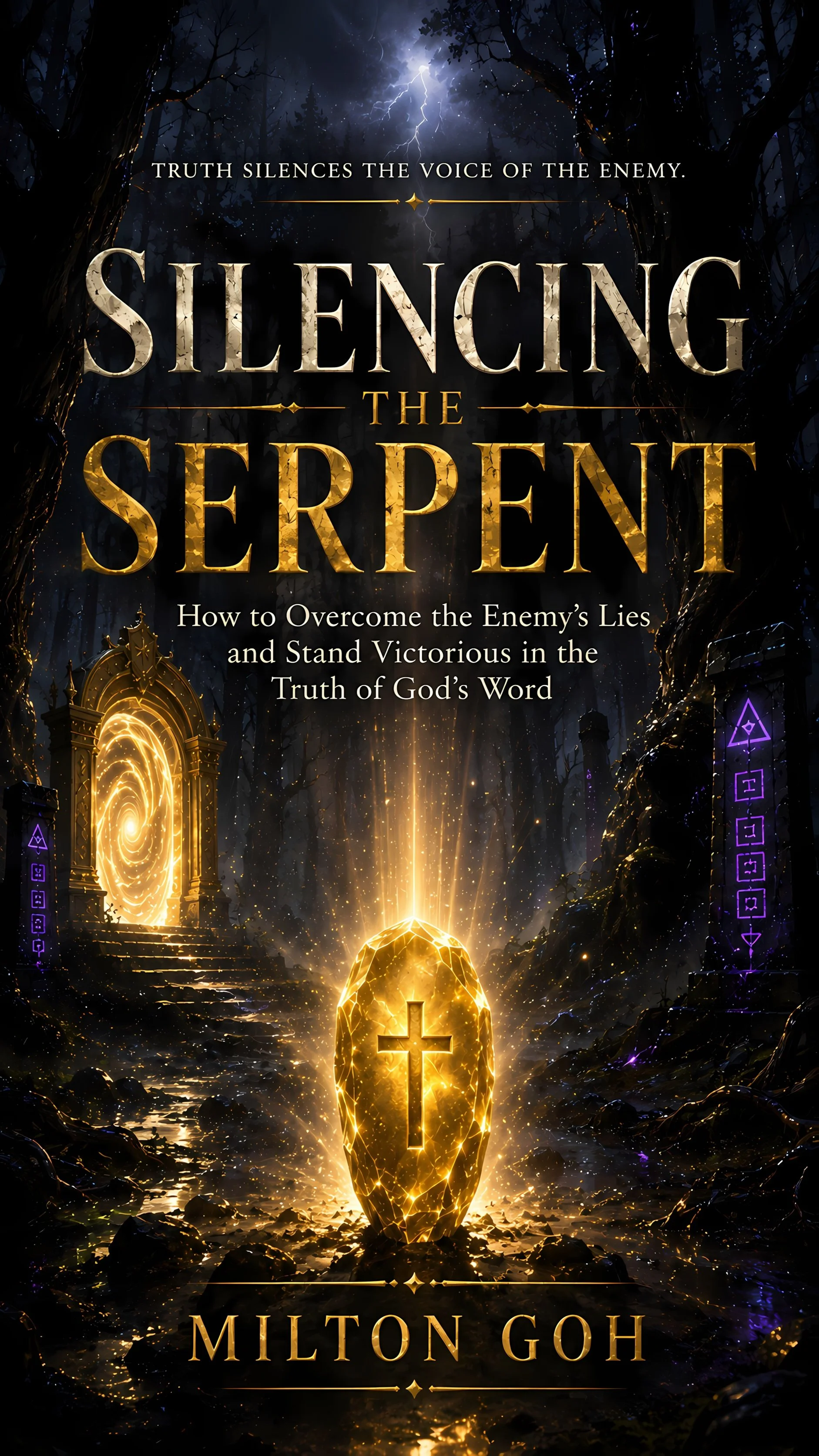
This is a digital downloadable eBook.
It is a revised definitive edition that was previously published as Silencing the Serpent by Milton Goh.
If you would like to purchase the physical paperback version of this book, you can order it on Amazon.
What if the enemy’s most dangerous lie is the one you have already accepted as truth?
Satan does not always attack with something obviously evil. Sometimes deception sounds reasonable. Fear feels justified. Condemnation feels deserved. A wrong belief can remain hidden for years—quietly shaping the way you see God, yourself, and your future.
But lies lose their power when truth enters.
Silencing the Serpent is a Scripture-centered guide to spiritual warfare that will help you recognize the enemy’s deceptions without becoming fascinated with darkness or afraid of spiritual opposition.
In this definitive revised edition, Milton Goh takes you through God’s Word to show you how to stand firmly in what Jesus Christ has already accomplished through His finished work.
Discover how to:
Recognize temptation, accusation, deception, and spiritual strongholds
Renew your mind with biblical truth and reject condemning lies
Stand securely in your righteousness and identity in Christ
Resist the devil from a position of faith rather than fear
Pray confidently for healing, provision, protection, and deliverance
Understand the biblical place of angels, fasting, spiritual gifts, and prayer in the Spirit
Use the armor of God as part of a Christ-centered life of truth, faith, hope, and prayer
Walk by the Holy Spirit and resist bitterness, temptation, fear, and condemnation
Spiritual warfare is not about obsessing over demons, discovering secret spiritual formulas, or becoming impressed with the power of darkness.
Jesus is the center of the Christian life.
He has redeemed you. God has justified you. The Holy Spirit dwells in you. And the truth of God’s Word gives you firm ground on which to stand.
This is not a book about becoming fascinated with darkness. It is about becoming established in the truth.
Learn to recognize the lie, answer it with truth, resist the serpent, and keep your eyes fixed on Jesus.
Customer Reviews for the first edition of “Silencing the Serpent”:
"Thank you brother Milton for this amazing book. It has been much needed in my current season when I'm going through so much demonic attack through people supposedly close to me. God has used the Word to remind me that He is with me ALL the way and that I should have NO fear. No weapon formed against me can prosper and every tongue raised against me in judgement I have the power to condemn with ALL the weapons of warfare given to us by God. I'm blessed and grateful to God for using you to assure me of His Mighty Presence--that He will never leave me nor forsake me. Hallelujah & Amen!" - Shally Joseph from India
"Milton Goh, I downloaded your book and it was God's appointed time for my breakthrough. He destroyed a stronghold in my life that was rooted on a lie. A light just went on in an instant and the Lord uprooted a wrong belief. I struggled now for years with a relationship and I believed a lie that a sin I committed in the past was unforgivable, and I judged the other person for the same sin. It was unconscious and I didn't know that I was bound by this lie. When I read a chapter in this book, about strongholds in the mind, the Holy Spirit revealed it to me in a flash and it was as if the walls of Jericho were tumbling down! Thanks for this book--it is from the Lord!" - Antoinette Hurter Keyser from South Africa
"A short testimony to share after reading the chapter about girding up our loins with the TRUTH. After reading it, I met some of my colleagues and the first thing they told me was, "You are fat, you put on weight," not even "Hi, hello, how are you..." At first, I was sad over the remarks. But almost immediately, I was reminded of truth of God's Word which says that "I am highly favored, beloved of Jesus, and Jesus sees me as fit and healthy. I am not defined by what others say, but by what Jesus says!" After that, I carried on with work and went for my run and managed to complete close to 5km. Something which I have never done before. All praise and glory to Jesus. Thank you, brother Milton for your teaching on the armor of God shared in this book! - Alwin Seeni from Singapore
"Thank you brother Milton. Your insights are a blessing. God bless you with many more beautiful revelations." - Shirley Thomas from India
“Anointed book. I am fully blessed by this book. My heart has has been filled with peace and joy since I read it. Wrong beliefs and strongholds are loosing their hold on me.” - Loise from the USA
“Full of useful tips. Another great book by Milton Goh well worth buying and sandcastles don't last forever is another fantastic read.” - Tamz from the UK
Frequently Asked Questions
-
For a Christian, condemnation is not God's verdict over someone who is in Christ. Romans 8:1 declares that there is no condemnation for those who are in Christ Jesus. The believer can still experience correction and conviction, but these should lead toward repentance and restoration rather than hopeless shame.
-
Christians overcome deception by knowing God's Word, testing thoughts against biblical truth, remaining close to Jesus, praying, receiving the Holy Spirit's help, and standing in their identity in Christ.
-
Biblical conviction identifies what is wrong and draws a person toward God for repentance and transformation. Condemnation attacks a person's identity and pushes them toward fear, shame, hopelessness, and distance from God.
-
Righteousness in Christ means that believers are accepted and justified before God through faith in Jesus rather than through their ability to achieve perfect righteousness by their own works.
-
Ephesians 6 describes the breastplate of righteousness as part of God's armor. Knowing that righteousness is found in Christ helps protect believers from accusations that tell them their standing with God depends upon fluctuating personal performance.
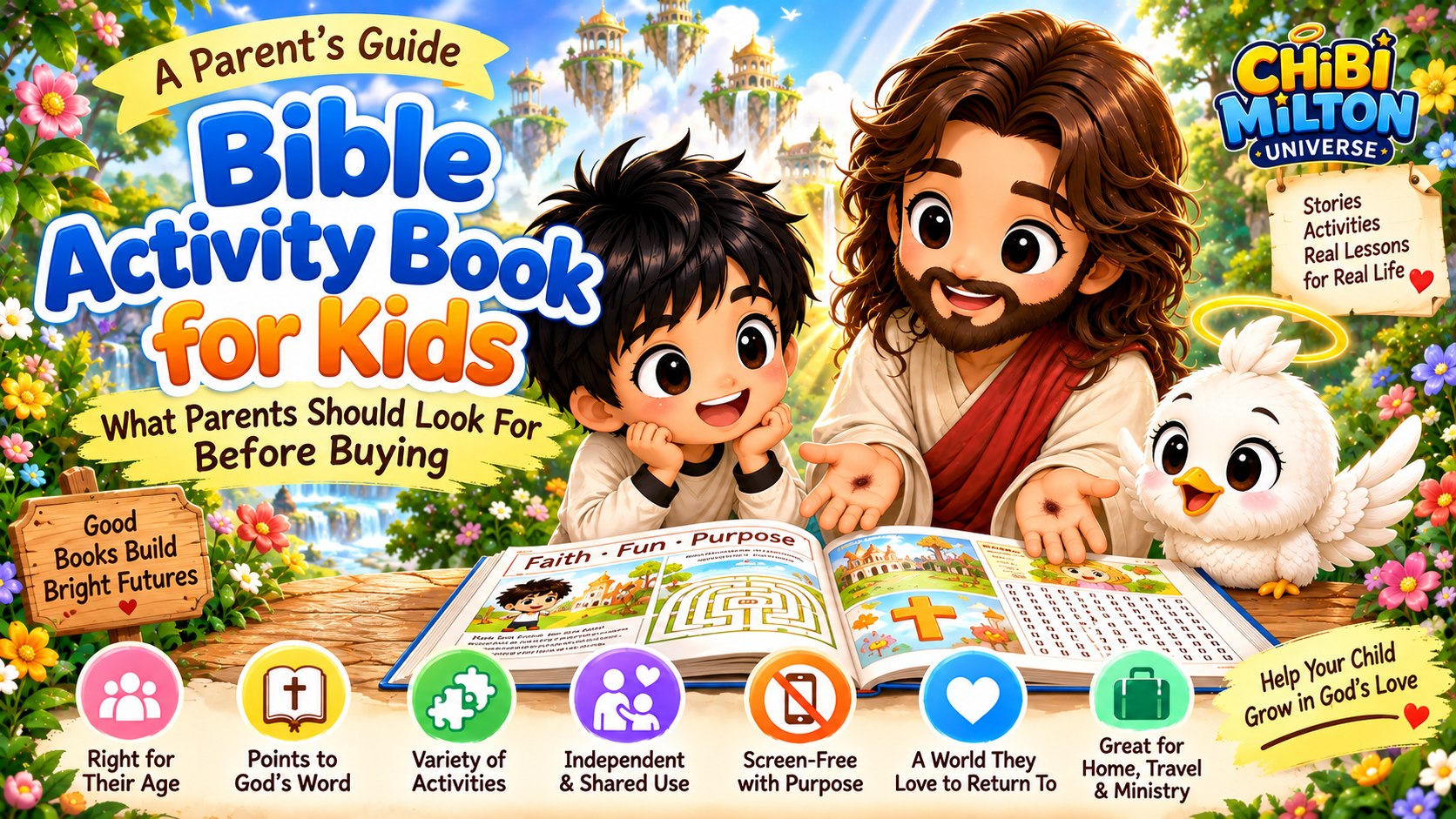
Bible Activity Book for Kids: What Parents Should Look For Before Buying
Choosing a Bible activity book for kids? Discover what to look for—from age-appropriate activities and biblical content to variety, engaging visuals, and screen-free fun that helps children enjoy God’s Word.
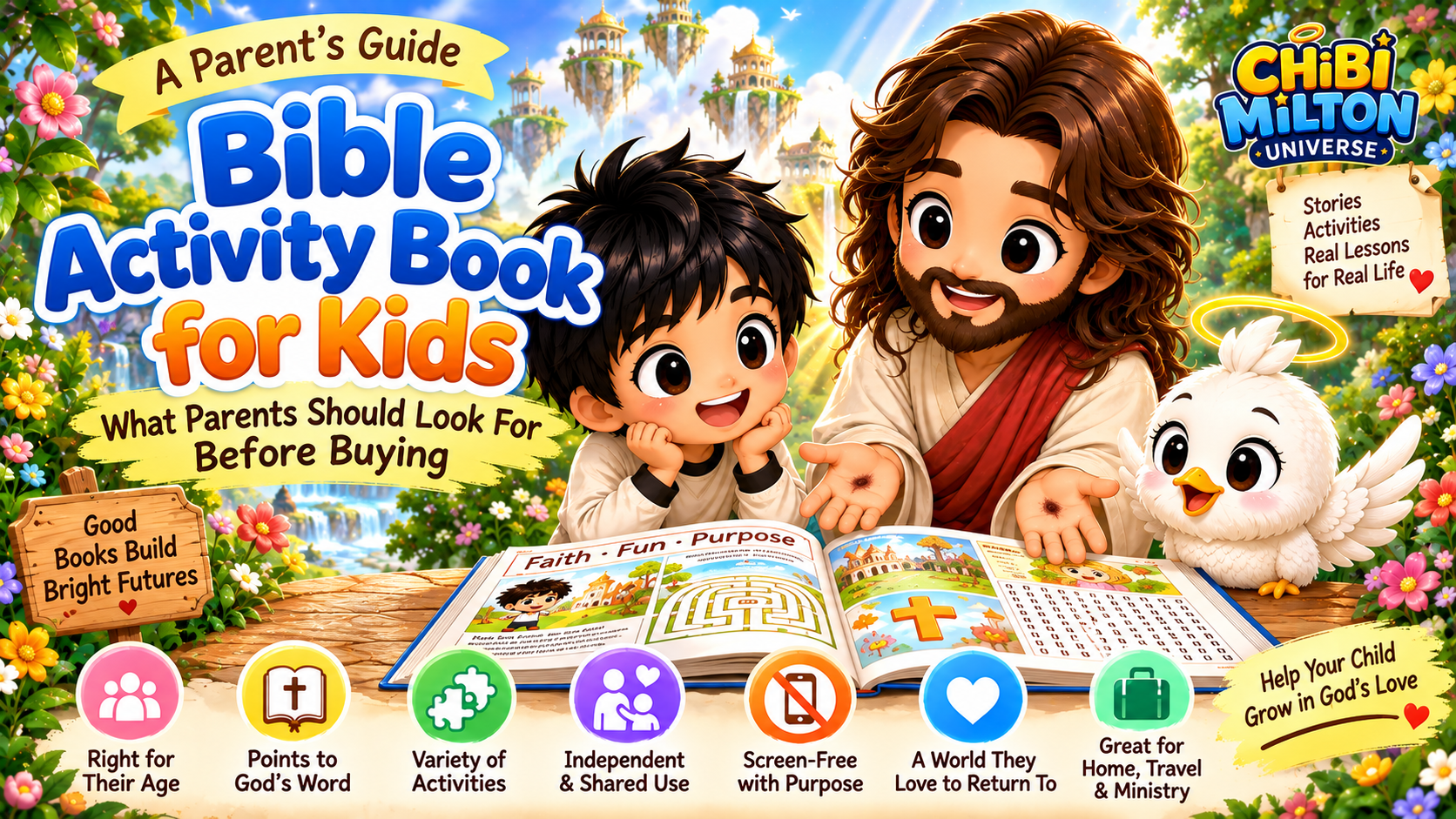
Search for a Bible activity book for kids and you’ll quickly discover that the choices can look surprisingly different.
Some are mostly coloring pages. Others focus on puzzles, stickers, crafts, Scripture memory or stories. Some are designed for preschoolers, while others offer more challenging activities for older children.
So how do you know which one your child will actually enjoy—and which one will help make God’s Word more engaging and memorable?
Here are seven things worth checking before you buy.
1. Choose for the child in front of you—not just the age range on the cover
“Ages 5–12” covers a surprisingly wide range of abilities and interests. A five-year-old and an eleven-year-old probably won’t enjoy exactly the same activities.
For younger children around ages 5–7, look for highly visual activities such as:
Coloring
Simple mazes
Seek-and-find activities
Matching games
Short illustrated stories or comics
Some word searches, reading activities and writing exercises may be more enjoyable with a parent nearby.
For children around ages 8–12, look for activities with a little more challenge, such as:
Puzzles
Treasure hunts
Longer comics or stories
Scripture memory challenges
Creative writing
Activities that encourage them to think about what they believe
For a broad age range like 5–12, variety matters.
A good mixture allows younger children to enjoy the more visual pages while giving older children something challenging enough to keep their attention.
Before buying, preview several pages and ask yourself:
Which of these activities would my child genuinely want to do?
That question is often more useful than simply looking at the recommended age printed on the cover.
2. Look for activities that point children back to God’s Word
A Christian activity book should offer more than Bible-themed decoration.
Look for activities that naturally encourage children to encounter Scripture, remember biblical truths, pray, think about Jesus, and understand who they are in Christ.
Activities can make those truths memorable.
For example, the Plant the Word activity in the Chibi Milton Universe Children’s Activity Book (Volume 1) uses the picture of seeds being planted in soil to help children engage with Mark 4:14:
“The sower soweth the word.”
Mark 4:14 (KJV)
Children can interact with Scripture “seeds” and illustrated soil while learning the biblical picture of God’s Word being sown.
Another example is Follow the Holy Spirit Maze, which introduces Romans 8:14:
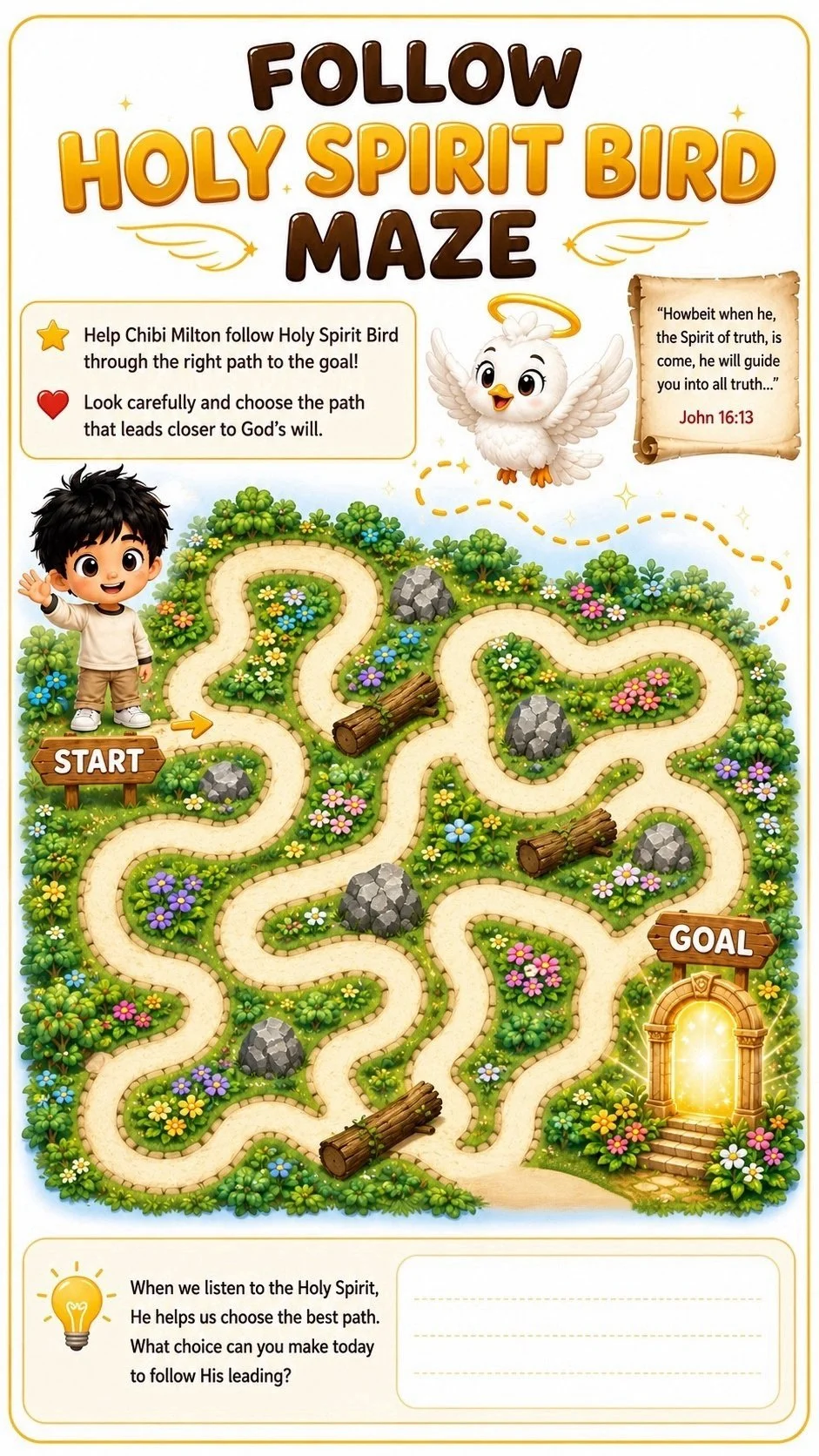
“For as many as are led by the Spirit of God, they are the sons of God.”
Romans 8:14 (KJV)
The maze provides a simple visual activity connected with the biblical truth of being led by the Spirit of God.
Within Chibi Milton Universe, Holy Spirit Bird is an imaginative visual representation connected with the Holy Spirit’s leading. The activity points children toward the real biblical truth rather than replacing it.
That is an important principle when choosing any Christian resource:
The activity should serve the biblical truth—not overshadow it.
3. Look for more than coloring
Coloring can be wonderful for children. It provides a quiet, creative activity and can help them spend time looking at a biblical scene or Christian message.
But if you are specifically looking for a Bible activity book for kids, variety can make the book much more engaging.
Depending on your child, look for a mixture of:
Coloring
Mazes
Word searches
Seek-and-find activities
Treasure hunts
Puzzles
Drawing
Memory verses
Prayer activities
Illustrated stories or comics
Different activities engage children in different ways.
One child may happily spend twenty minutes coloring while another immediately searches for the hardest maze in the book.
That is one reason the Chibi Milton Universe Children’s Activity Book combines several activity formats rather than functioning only as a Bible coloring book.
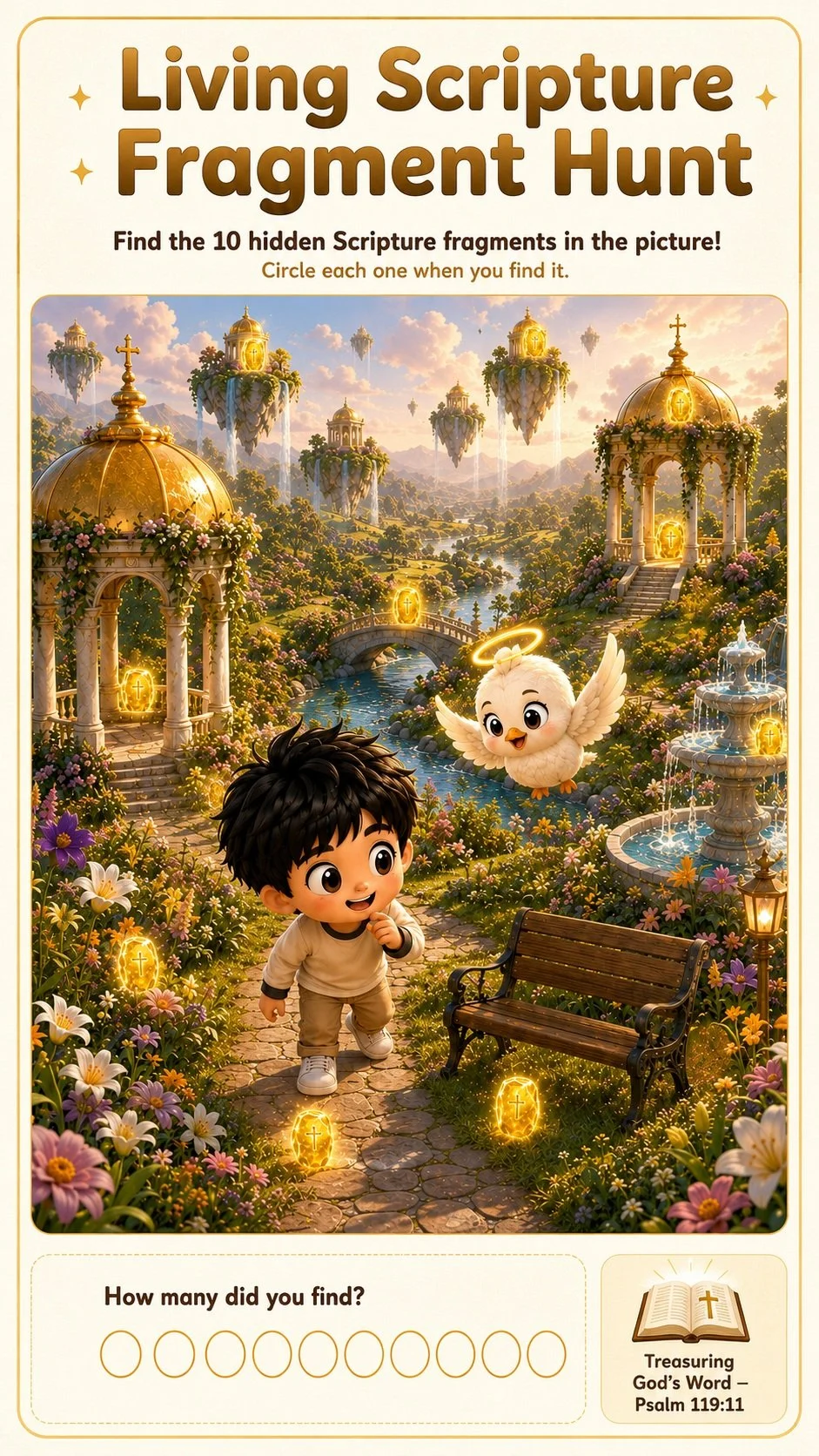
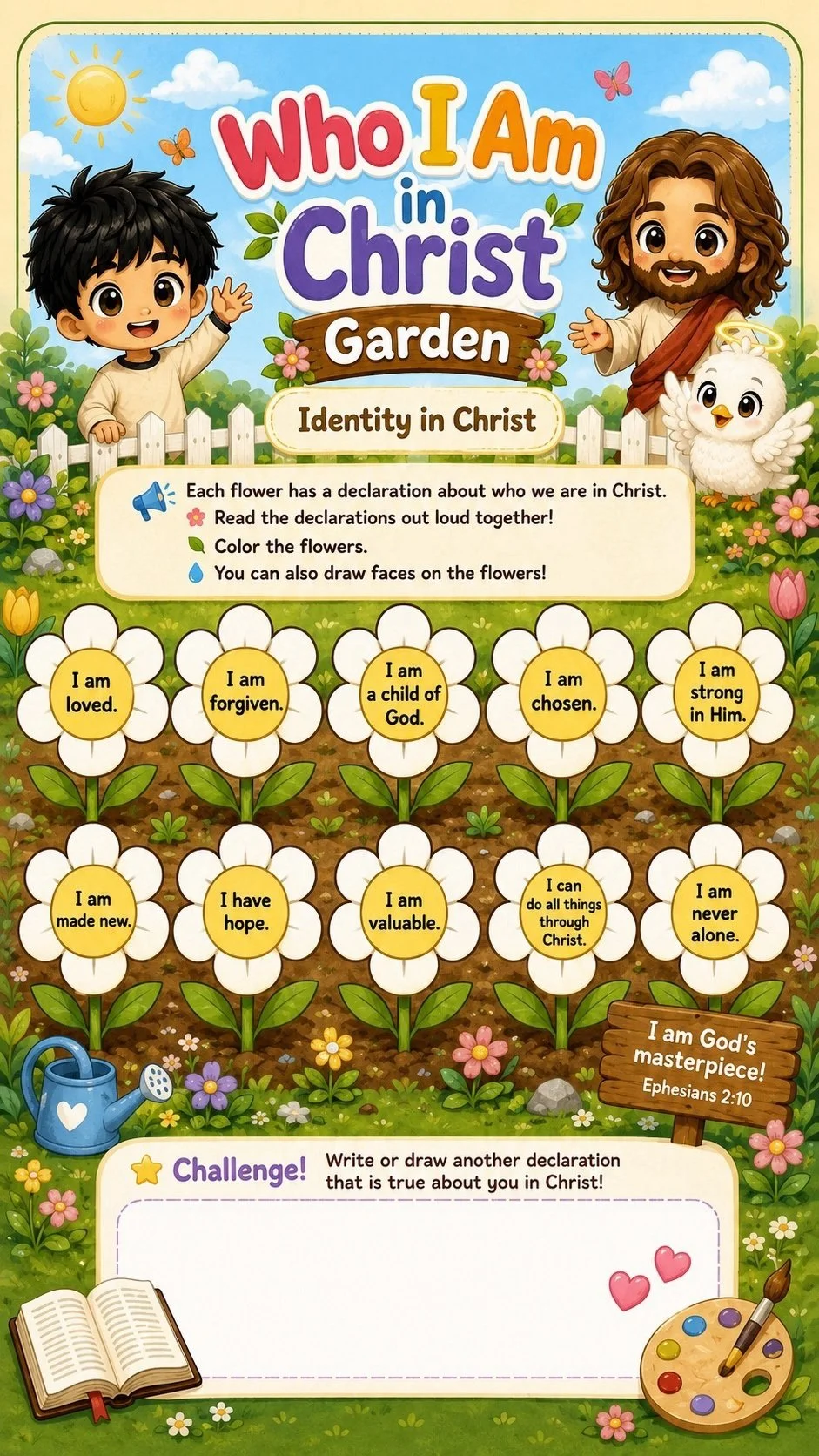
For example, children can encounter activities such as the Follow the Holy Spirit Maze, Living Scripture Fragments Treasure Hunt, Who Am I in Christ Garden, as well as illustrated stories from the wider Chibi Milton Universe.
The variety gives children different ways to explore, create, solve and learn.
4. Consider how independently your child can use it
Another useful question is:
Do I want something my child can work on independently, or something we can enjoy together?
There is value in both.
Simple visual activities may be ideal when your child wants something quiet to do independently.
Other activities become richer when a parent joins in.
For example, you might:
Read an illustrated story together.
Help with a difficult word search.
Talk about a memory verse.
Discuss an identity-in-Christ activity.
Pray together after completing a page.
Younger children will naturally need more help with reading, writing and challenging puzzles.
Older elementary-age children may be able to complete many activities independently while still benefiting from conversations about the biblical truths behind them.
A good Christian activity book can therefore become more than something that simply keeps a child occupied.
It can create opportunities for meaningful conversations.
5. Look for screen-free fun that still has a purpose
There are plenty of ways to keep children away from screens for an hour.
But Christian parents may want something more than simply filling time.
Ask:
What might my child take away from this activity after the page is finished?
Perhaps it is:
A Bible verse they remember
A truth about Jesus
A reminder of God’s love
A better understanding of who they are in Christ
A conversation with Mum or Dad
A desire to open the Bible and learn more
That is where a Christian activity book can be especially valuable.
The goal does not have to be turning every activity into a formal Bible lesson.
Children are allowed to simply have fun.
But when enjoyable activities are thoughtfully connected with biblical truth, learning about God’s Word can become associated with discovery, creativity and joy rather than feeling like another piece of homework.
6. Choose a book with a world children want to return to
Children are highly visual.
They notice characters, expressions, colors and environments.
A beautifully illustrated Christian activity book can invite a child to explore before they have even read the instructions.
This is one area where the Chibi Milton Universe takes a different approach.
Instead of presenting children with a collection of unrelated worksheets, CMU introduces them to recurring characters and imaginative environments.
Children can meet characters such as Chibi Milton and Holy Spirit Bird while exploring places such as Grace Garden through stories and activities.
That allows a maze, treasure hunt, comic and coloring activity to feel like parts of a larger adventure rather than isolated worksheets.
Original characters do not make a resource more biblically faithful by themselves, of course.
Scripture remains the foundation.
But an imaginative world can make children more eager to open the book—and that matters when the goal is to help them enjoy engaging with Christian truth.
7. Think about where your child will actually use it
Finally, consider when and where the book is likely to come out.
A useful Bible activity book can work in several settings.
At home
Keep it available for quiet afternoons, weekends, family devotional time or whenever your child wants something creative to do.
While traveling
Activity books can be useful during flights, road trips, holidays and waiting periods when you would prefer a screen-free option.
During homeschool
Bible activities can supplement Scripture reading or provide a creative change of pace during the school day.
At Sunday school or children’s church
Selected activities can help reinforce a lesson or provide something meaningful for children who finish another task early.
An activity book does not have to replace a Bible curriculum or family Bible time.
It can simply become another useful tool in your Christian resource collection.
How does the Chibi Milton Universe Children’s Activity Book compare?
The Chibi Milton Universe Children’s Activity Book (Volume 1) is a full-color Christian activity book created by Christian author and Bible teacher Milton Goh.
It is designed primarily for children ages 5–12 and introduces them to the wider Chibi Milton Universe through stories, activities and original characters.
Here is how it compares with the seven things we have just discussed:
-
Designed for ages 5–12 with varied activities. Younger children may enjoy some pages with parental help.
-
Scripture memory, prayer activities, identity-in-Christ themes and activities connected with passages such as Mark 4:14 and Romans 8:14.
-
Stories, coloring, mazes, word searches, treasure hunts, puzzles and other hands-on activities.
-
Some activities can be enjoyed independently, while stories and faith-based activities can create opportunities for parent-child conversations.
-
A physical paperback designed for pencils, crayons, reading and hands-on play.
-
Original CMU characters and environments including Chibi Milton, Holy Spirit Bird and Grace Garden.
-
Suitable for home, travel, homeschool enrichment and supplementary children’s ministry use.
The important question is still not whether a book checks the most boxes.
It is whether those boxes match your child.
A quick checklist before you buy
Before choosing a Bible activity book for your child, ask:
Is it appropriate for my child’s age and ability?
Does it use Scripture thoughtfully?
Does it contain enough variety to hold my child’s interest?
Are there activities my child can do independently?
Are there activities we can enjoy together?
Does it offer more than simply keeping my child busy?
Are the illustrations and activities inviting?
Can we use it in several different settings?
Most importantly, will this help make engaging with God’s Word enjoyable and memorable?
If you can answer yes to most of those questions, you may have found a good fit.
Ready to take a closer look?
If you’re looking for a colorful, screen-free Christian activity book that combines Bible-inspired learning with stories, puzzles, mazes, coloring and imaginative adventures, take a closer look at the Chibi Milton Universe Children’s Activity Book (Volume 1).
Designed for children ages 5–12, it brings together original CMU characters, full-color stories and varied hands-on activities to help make learning biblical truths enjoyable and memorable.
Explore the Chibi Milton Universe Children’s Activity Book and preview real sample pages to see whether it is right for your child.
Frequently Asked Questions
-
A Bible coloring book focuses primarily on pictures children can color. A Bible activity book usually offers a wider range of activities, which may include coloring alongside mazes, puzzles, word searches, stories, Scripture memory, drawing or other interactive activities.
If your child loves coloring, a dedicated coloring book may be exactly what you want. If they enjoy variety, a mixed activity book may hold their interest longer.
-
It can if the book contains a sufficiently broad mixture of activities, although the two children probably will not enjoy every page equally.
A younger child may prefer visual activities and need help with reading or puzzles, while an older child may gravitate toward more challenging activities and longer stories.
For broad age ranges such as 5–12, variety and parental involvement are important.
-
No.
A Christian activity book works best as a supplementary resource that helps children engage with, remember and discuss biblical truths.
Activities, stories and illustrations can make those truths memorable, but Scripture itself remains the foundation.
-
Look for age appropriateness, biblical faithfulness, engaging illustrations, varied activities, opportunities for both independent and shared use, and content your child will genuinely want to return to.
The best choice is not necessarily the book with the most pages or activities. It is the one that fits your child and helps make engaging with biblical truth enjoyable.